What You Actually Pay for Free Online Shooter Games
You click a link, wait maybe five seconds, and suddenly you're trading shots with a stranger in Ohio or Lisbon — no card number, no installer, not even a username if you don't want one. Free online shooter games make the whole thing feel weightless. Somebody is still paying for the servers, though, and for the artist who drew your ship and the developer patching bugs at two in the morning. Knowing who that somebody is doesn't ruin anything. It just makes it a lot easier to tell a generous game from one that's quietly working an angle on you.
Free Has Always Had a Business Model Behind It
Handing games out for nothing is a much older trick than it looks. In the early nineties id Software gave away the first episode of Doom as shareware and bet that people would pay for the rest — a bet that paid off nicely. Flash portals later swapped that model for pre-roll ads and banners wrapped around the game window. That try-it-first idea has since spread across a lot of online entertainment, from streaming trials to casino platforms like cowboyspin that open straight in a browser tab.
The big studios came around eventually. Team Fortress 2 went free-to-play in 2011 and became almost as famous for its hat economy as for the game itself; six years later Fortnite showed what a free shooter could become when the shop sold nothing but outfits and dance moves. Browser developers were paying attention. Most of them work with a fraction of those budgets, so they tend to mix a few income streams and hope the combination covers the bills.
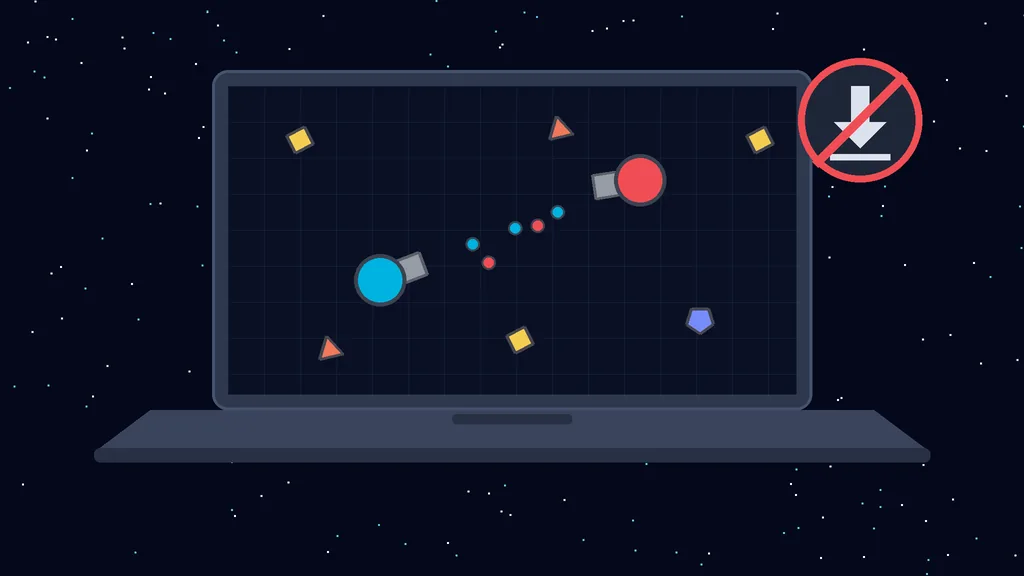
Ads, Skins, and Season Passes and Where the Money Comes From
For most free shooter games online, ads come first, mainly because they ask so little. A banner beside the play area, a fifteen-second clip between rounds — that's about the oldest deal on the web. You hand over a moment of patience, the developer pays a hosting invoice, and the match itself stays untouched.
| Model | How it works | What you'll notice | Effect on fair play |
|---|---|---|---|
| Banner and pre-roll ads | A banner, or a short video before the match | A few seconds of waiting | None |
| Rewarded video ads | Watch a clip, get a small bonus | Optional, now and then tempting | Minor, if the bonus is small |
| Cosmetic shop | Skins, colors and trails for money | Some ships look much fancier than yours | None |
| Season pass | A paid track of unlockable rewards | A progress bar that nags a bit | Usually none |
| Paid power | Better weapons or stats for cash | Certain players feel impossible to beat | Big |
Cosmetics sit one rung higher. A neon trail or a gold tank skin looks great and doesn't add a single point of damage, which is precisely why most players shrug and accept them. Season passes push a little harder, with timers and that nagging feeling you're about to miss something, but as long as the rewards stay cosmetic, nobody gets an edge they didn't earn.
"Good free games sell you things you want. Once you have to pay just to keep up, calling it free is a stretch."
When Shooter Games Free Online Stay Fair and When They Tip
What most players really care about is pay-to-win: put money in, get better guns, beat the people who didn't. Developers sometimes see a nice bump in revenue from it for a while. Then the non-paying crowd slowly wanders off, the servers empty out, and the paying players are left with nobody to beat.
The warning signs usually show up within your first couple of matches:
- Upgrades for real money that add raw damage or health
- An energy meter that locks you out unless you pay
- A discount pop-up appearing right after you lose
- Two in-game currencies, one of which you can only buy
- A leaderboard full of accounts with obviously purchased gear
- Starter weapons that feel like water pistols next to everyone else's
One of these on its own isn't a disaster; a small paid boost in a casual arena hardly matters. When three or four turn up together, though, it's a pretty clear hint the game was built around your wallet rather than your aim.
Why No Download Matters More Than It Sounds
"No download" gets sold as a convenience, and fair enough — no disk space gone, no installer, no forty-minute patch on a Friday night. The bigger benefit is less obvious. You aren't running unknown software on your machine. There are still sketchy sites out there bundling "free game" installers with toolbars and worse, and a game that lives in a browser tab simply has no way to pull that off.
| Factor | Downloaded client | Browser game |
|---|---|---|
| Time to your first match | Minutes, sometimes hours | Seconds |
| Storage used | Several gigabytes | Next to nothing |
| Updates | By hand or through a launcher | Automatic when you reload |
| Risk from unknown sites | Real, if the source is shady | Kept in check by the browser sandbox |
| Locked work or school laptops | Often blocked | Usually fine |
Still, free online shooter games with no download are safer by design, not by magic. The sites around them range from excellent to pretty dodgy, so a few habits are worth keeping:
- Stick with sites you recognize, or ones with a busy player base
- Walk away from any game that wants you to install a "launcher" or plugin
- Close pop-ups that claim your computer is infected
- Keep your real name and town out of in-game chat
- Use a spare email address if a game insists on an account
- Let your browser update itself instead of postponing it
None of that takes more than a few seconds. The browser does most of the protective work on its own; your job is mostly not to talk it into something silly.
"The tab itself is one of the safest places to play anything. It's whatever has been wrapped around the tab that deserves a second look."
Trying Before Committing Has Become the Default
Zoom out and free shooters turn out to be one small piece of a much bigger habit. We preview albums before buying them, watch a pilot before committing to a season, wander through app stores and casino lobbies before spending a cent. Sampling first has become normal, and online free shooter games did a lot to make it that way.
For players, that's mostly good news. Because leaving costs nothing, free games have to compete hard for your attention, and that keeps developers fairly honest. If one shooter starts nickel-and-diming you, there are a dozen more a click away.
So free online shooter games are rarely free in the strictest sense. You pay with a few seconds of ads, maybe a couple of dollars for a skin you happened to like, and always with your time — which is a perfectly fine trade when the game respects it. Keep an eye out for pay-to-win signs, skip anything that wants to install itself, and enjoy a fast, competitive game that costs nothing to try.