What Happens When Strangers Share a Space Multiplayer Game
Cruising alone through a silent galaxy is nice for a while. Then a blip pops up on your radar and the mood flips. Friendly? Hostile? Just as lost as you? You don't know yet — and that half-second of not knowing is the thing a space multiplayer game does better than nearly anything else in gaming. The stars, the lasers, the glowing engines are set dressing, honestly. The real content is the people flying around in them, and people are wonderfully hard to predict.
You can see the same shift all over the internet, to be fair. Group chats took over from phone calls, a decent stream pulls in thousands of viewers at once, and even the lobbies of online casinos like slotraze are designed around the simple idea that playing feels better with other people nearby. Space games just got there first. They've had a couple of decades to work out what actually happens when you drop strangers into the same sky.
A Universe That Keeps Going After You Log Off
The boldest take on this is the persistent universe. EVE Online opened in 2003 with a single galaxy that everyone shares — there are no separate servers and nothing ever resets. Wars there drag on for months. Whole corporations rise and collapse while half their members are asleep in another time zone. My favorite example is from 2014: a missed sovereignty bill (basically an unpaid rent payment) left one system exposed, and the fight that followed at B-R5RB went on for roughly twenty-one hours.
Most games don't go anywhere near that far. The promise underneath is similar, though: stuff happens whether you're watching or not. A trade route turns nasty. A rival clan grabs a sector. Somebody builds a base right where you used to mine. Logging back in after a week away feels a bit like coming home from vacation to find the neighbors repainted the whole street.
"In a persistent universe, the developers don't write the story. Whoever happened to be online that night does."
Rivals, Wingmates, and Everyone in Between
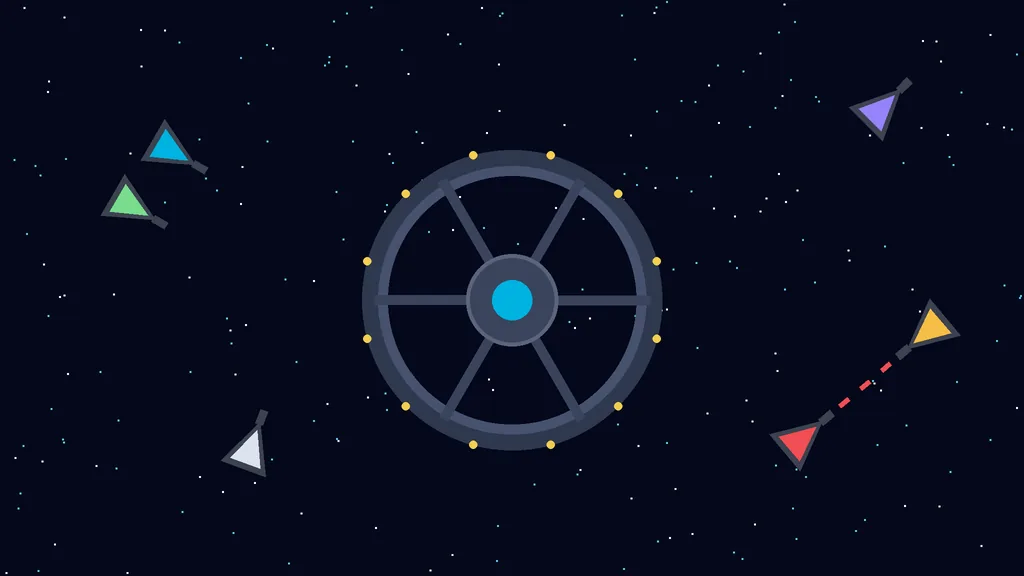
Throw enough people into one sky and they start sorting themselves into roles, usually without a word being said. Some want a fight every single minute. Others would happily fly a thousand light-years to look at a nice nebula and then fly home. Plenty of people switch between the two depending on how their day went.
| Role | What they usually do | Where you'll run into them | What they bring |
|---|---|---|---|
| The rival | Hunts other players for the thrill | Arenas, contested zones | Tension, something at stake |
| The wingmate | Stays close and watches your back | Co-op missions, squads | Trust and shared wins |
| The trader | Hauls cargo and plays the market | Big sandbox universes | An economy that feels alive |
| The explorer | Wanders off to see what's out there | Huge open galaxies | Maps and finds others can use |
| The tourist | Pops in, looks around, leaves | Pretty much everywhere | New faces, random chaos |
What surprises a lot of people is how much teamwork happens with no voice chat at all. Even in quick browser arenas, players invent a sort of body language on the fly:
- Slowly circling another ship to say "I'm not going to attack"
- Firing a couple of shots into empty space as a warning
- Trailing a stronger player to grab the leftovers
- Dragging enemies toward a third player who's busy elsewhere
- Parking beside someone to share a safe corner
- Leaving after a win instead of camping the respawn point
You won't find any of that in a rulebook. One player tries it, someone else copies it, and a week later it's just how things are done.
From Galaxy-Sized Sandboxes to Five-Minute Arenas
Not everyone wants what amounts to a second job running a space corporation, and luckily they don't have to. Elite Dangerous (2014) hands you a full-scale Milky Way and lets you choose how social you feel like being. No Man's Sky launched as a mostly solitary trip in 2016, then added proper multiplayer two years later after a lot of loud feedback. And Among Us — technically a space game, set on a spaceship — turned into a worldwide hit in 2020 by making the whole thing about lying to your friends.
Way down at the other end you've got browser arenas, where a match lasts a few minutes and nobody remembers your name tomorrow. Both extremes have loyal fans.
| Type | Time per session | How social it gets | Example |
|---|---|---|---|
| Persistent sandbox | Hours, sometimes days | Very, with clans and politics | EVE Online |
| Open galaxy, co-op optional | An evening or so | As much as you like | Elite Dangerous, No Man's Sky |
| Social deduction | 10–15 minutes | Completely, it's all talking | Among Us |
| Browser arena | A few minutes | Light, mostly silent rivalry | Spaceblast and other .io games |
Picking a Multiplayer Space Game That Fits Your Crowd
Type "new space game multiplayer" into a search bar at one in the morning and you'll get a wall of results that all look the same in screenshots. What really separates them is who you'll end up playing with, and how much of your week the game quietly expects.
A few honest questions before you get attached:
- Are you playing with friends, strangers, or a mix?
- How many hours a week can you actually spare?
- Does losing progress to another player sound fun or awful?
- Is there an active player base right now, not just at launch?
- Can you go solo or private when you need a breather?
- Will it run properly on the computer or phone you really own?
None of these have a right answer. A brilliant multiplayer space game for a bunch of college roommates can be a miserable one for someone who just wants twenty quiet minutes after work.
"Want to know what a multiplayer game is really like? Watch how its regulars treat newcomers. That says more than any trailer."
Why Space Game Multiplayer Keeps Pulling People Back
Part of the answer is simple. Space is enormous and mostly empty, so running into another human out there feels like an actual event. Beating a big enemy fleet with a few strangers sticks in your head far longer than any solo high score. And getting betrayed — the pilot you trusted suddenly opening fire — gives you a story you'll still be telling years later.
That hunger for shared moments runs through a lot of online entertainment now, whether it's co-op games, live streams or a busy casino lobby. People like knowing somebody else is there.
At the end of the day, a space multiplayer game is less about the ships than the strangers flying them. The universe might be a sprawling galaxy or a tiny arena sitting in a browser tab. Either way, the moment another player shows up on your screen, the game turns into something no designer could fully script. Some nights you'll get a friendly wave from a passing pilot; other nights, an ambush you never saw coming. That's the fun of it.